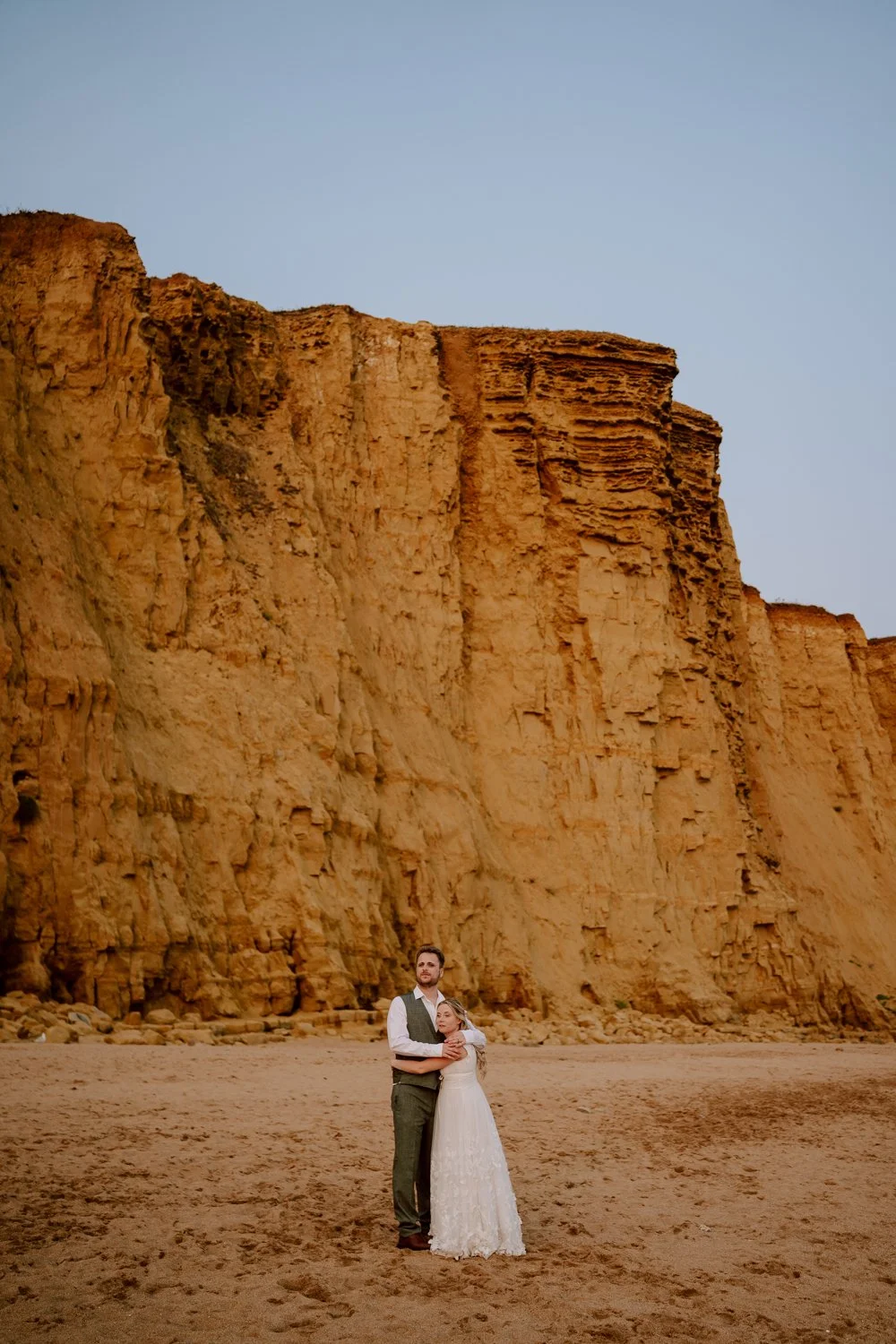
An open letter to the wedding industry from a visually impaired couple

I asked my past client Lauren what she wished the wedding industry knew about inclusivity, here’s what she had to say…
“Hi, I’m Lauren (she/her)! I’m a dancer, traveller (33 countries and counting!), iced beverage enthusiast, and newlywed who also happens to be visually impaired. I was born with a rare eye condition called Peters’ Anomaly and have been registered blind since my teens, but that’s just one part of who I am. My guide dog, Kilko, has been my furry co-star for four years, making everything from grabbing coffee to getting married far more doable.
I met my husband at a boarding school for blind students when we were teenagers, and we got married in August, 11 years to the day after we started dating as teens. He’s now a physicist researching how black holes affect star formation, and I work as an Eye Care Liaison Officer supporting people newly diagnosed with sight loss.
Accessibility matters so much to me, not just because I’m blind, but because every couple deserves a wedding experience where their needs are met without having to explain, negotiate, or fight for them. Like, hello? Wedding planning is already stressful enough!
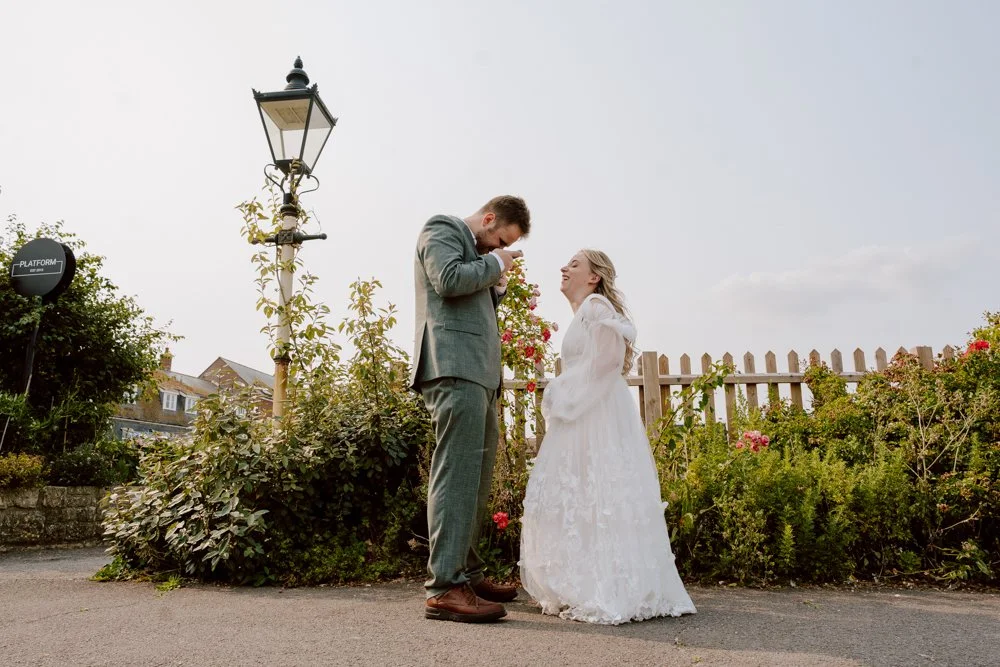
1. Disabled people get married too!
Disabled people want the same things nondisabled people want: beautiful venues, talented suppliers, gorgeous photos, stunning outfits, and unforgettable weddings. Disability doesn’t cancel out a desire for beauty, style, romance, or celebration. We’re not a “niche”, we are a part of your customer base, and there are more of us than you think.
2. Representation matters
When choosing suppliers, my husband and I actively searched for people who included disabled clients in their work.
We chose Kim as our photographer because she talked openly about inclusivity AND I could see disabled people on her feed. It immediately told me “our access needs aren’t too much for her, we are welcome”.
Not all disabilities are visible, but if your feed has zero visibly disabled people, it’s hard not to worry “do they even want clients like me?”
3. Alt text is essential, not optional
Imagine scrolling through Instagram and every single post is blank. You can see people commenting “wow!!!” and “omg this is incredible!”, but you have no idea what they’re looking at. That’s a blind person’s experience when posts don’t have alt text.
Alt text lets blind and visually impaired people access your work, it allows you to provide an invisible image description which screen readers will read out.
Instagram makes it incredibly easy:
Upload photo ➡️ Advanced Settings ➡️ Write Alt Text
(or Edit ➡️ Edit Alt Text)
Even a single sentence is enough:
“Bride and groom smiling on the beach, with a yellow lab sitting proudly at their feet.”
That’s all it takes for blind and visually impaired folks to actually see your social media content.
4. Closed captions make your videos accessible to so many people!
Deaf clients need captions. Hard-of-hearing clients need captions. Neurodivergent clients often prefer captions.
And, honestly? Plenty of people scroll Instagram on mute.
Stories / Reels ➡️ Stickers ➡️ Captions
Then give them a quick check before you post, because Instagram autocorrect likes chaos
5. Please, please make your text bigger and clearer
Pretty, swirly fonts may look “bridal”, but they’re impossible for many people to read. Not just visually impaired people, but dyslexic people, neurodivergent people, and anyone with a smaller phone screen or bright light glare.
Good contrast and clear, easy-to-read fonts makes your content accessible without losing aesthetic.
You can be beautiful and legible!!
6. Don’t assume what disabled people care about
Most blind people have some vision.
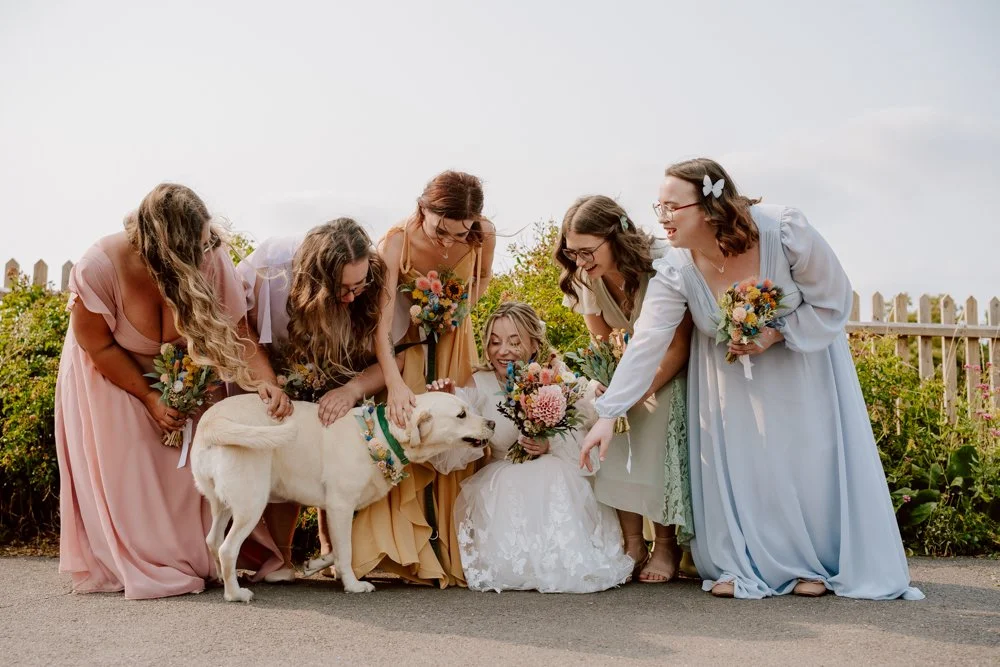
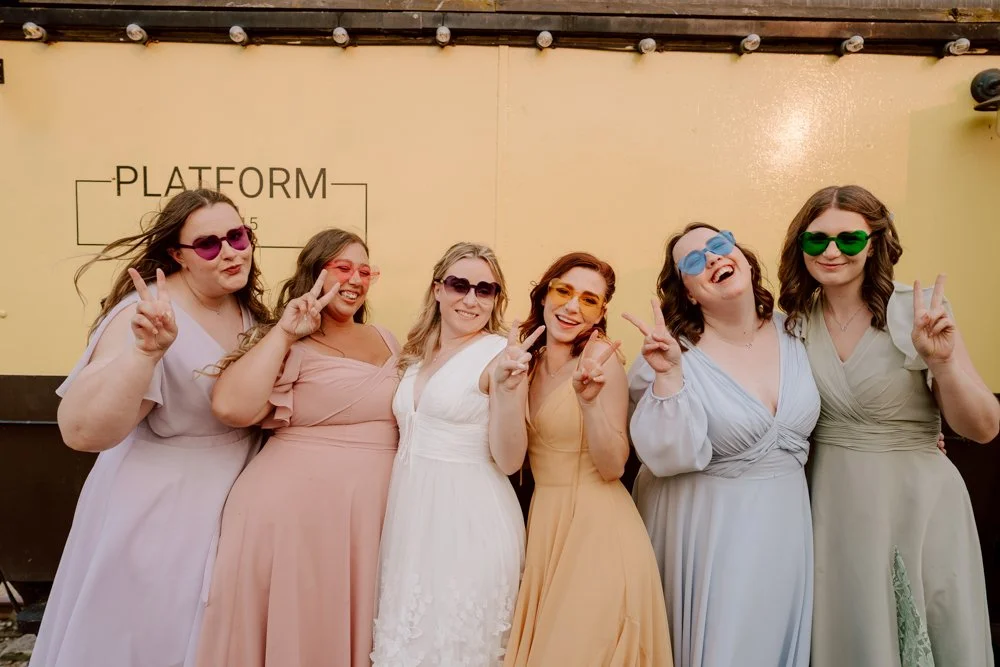
My detail vision is poor, but colour is incredibly important to me, blocks of colour is how I experience the world. That’s why my bridesmaids wore a rainbow of pastels!
Disabled people care about aesthetics, makeup, fashion, styling, florals… all the things nondisabled folks care about.
7. Mobility aids shouldn’t be cropped or edited out
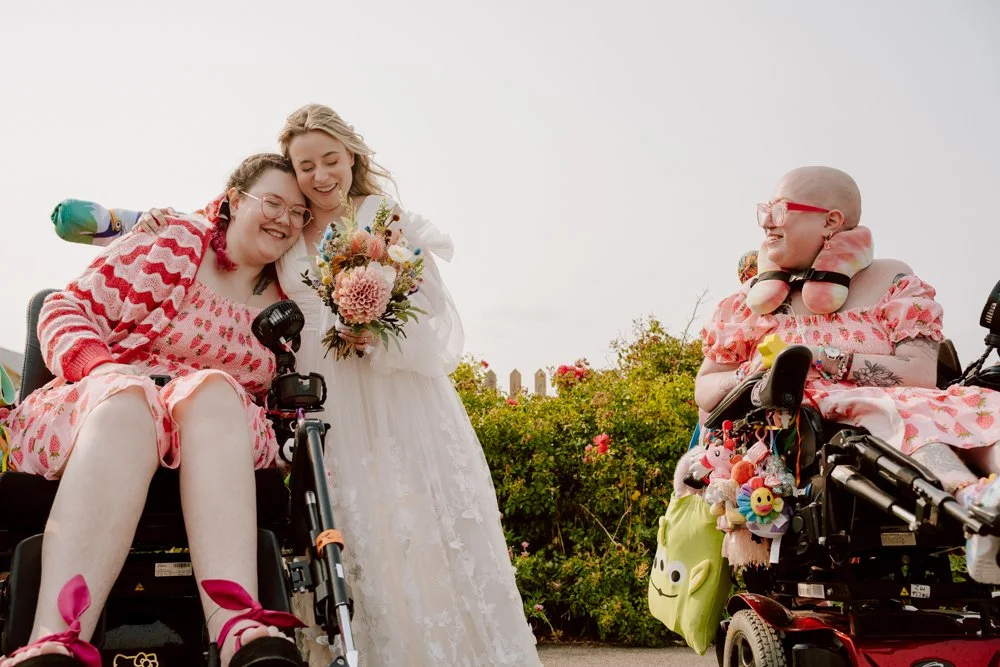
Some of your clients and their guests will have wheelchairs, walking aids, canes, or assistance dogs. These should be included in your photos. Mobility aids give us independence and freedom, but are often sadly viewed as a sign of weakness by nondisabled people.
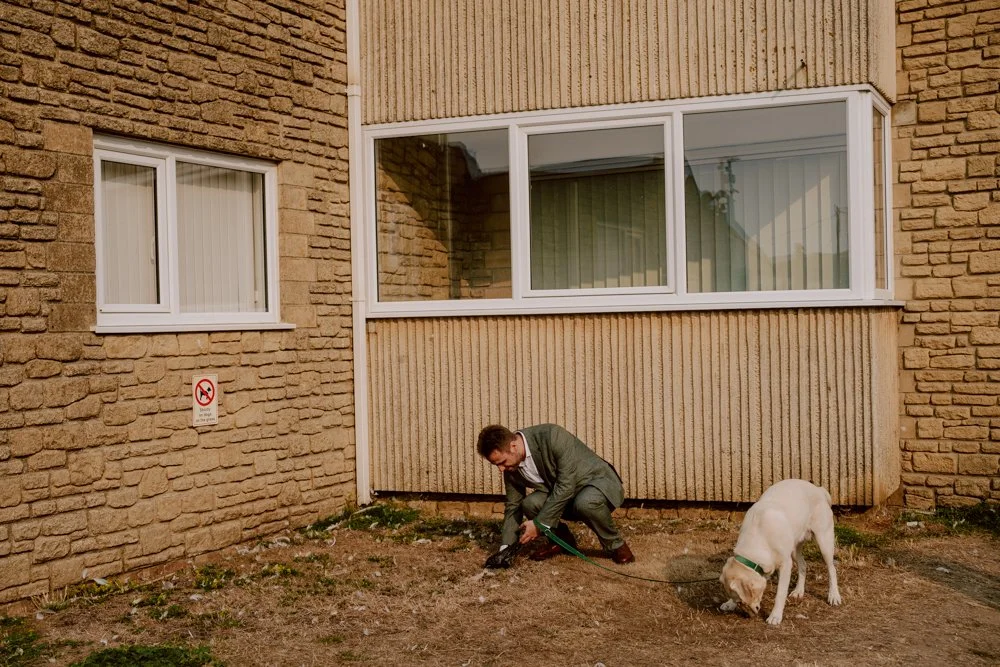
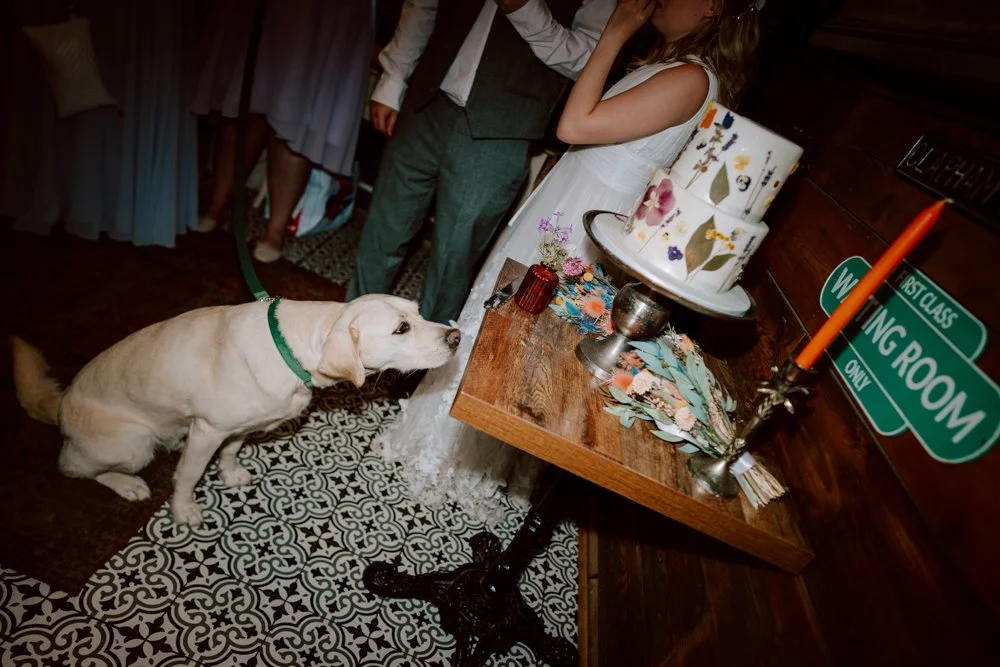
My guide dog, Kilko, was part of our day and appears in so many photos because she’s so important to me and a huge part of my life.
8. Check that your accessibility information is accurate
Two of our friends use large power chairs. The venue assured us they had ramps, but when our friends arrived, the ramps were unsafe for wheelchairs of their size. They physically couldn’t come inside for the ceremony.
The venue meant well, they genuinely didn’t know their ramps weren’t suitable. But intention doesn’t fix the moment.
Information that hasn’t been checked is not accessibility, it’s guesswork.
9. Make your website genuinely accessible
f your website doesn’t work with a screen reader, a blind person cannot use your service. It’s that simple.
Ask yourself:
• Can someone tab through your site with a keyboard?
• Are buttons actually labelled?
• Can text be zoomed in without breaking the layout?
• Is there good colour contrast?
• Are forms accessible?
If you’re not sure, there are free tools and checkers to help.
10. Venues: “step-free” tells us absolutely nothing
We need details. Honest, specific details.
Examples:
• Are your ramps suitable for heavy power chairs?
• Do you have a disabled toilet? A hoist?
• Is there a hearing loop?
• How wide are the doorways?
• How accessible is the route from parking to ceremony? Any uneven ground to cover?
• Can you offer large-print menus or signage?
This is not only useful for couples where at least one partner has a disability, but also for couples who will be inviting disabled guests. Grandma may use a rollator and struggle with uneven ground. Dad may use a hearing aid and find echoing spaces without a loop difficult. Uncle Gary may have a colostomy bag and need a toilet with more space. Please put this clearly on your website so people don’t have to send 14 emails asking for information, and can provide accurate information to their guests who may need it.
11. Use fewer emojis, or place them at the end of your sentence
Emojis look cute, and I know they’re a big part of wedding Instagram aesthetics. But for those who use screen readers, every emoji is read out in full.
So a caption like: “Wedding in this beautiful forest today! 😍✨🌿🧚🏻♀️🌸💜”
Sounds like this on my phone: “Wedding in this beautiful forest today! Face with heart-shaped eyes, sparkles, branch with leaves, woman fairy with light skin tone, cherry blossom, purple heart.”
It completely breaks the flow of the caption and makes posts harder to enjoy.
It’s absolutely fine to use emojis! Just keep them minimal, put them at the end of the caption, and avoid stringing loads together mid-sentence.
12. Keep learning! Nobody expects perfection, just effort
Even as a disabled person, I’m still learning about disability and accessibility every day. Nobody expects a supplier to know everything, but we do notice who tries.
There are brilliant (often free!) resources from disabled creators, charities like the RNIB, Guide Dogs, and accessibility content creators online. A little effort goes a long way!
Accessibility isn’t complicated or a “nice touch”, it’s a simple and incredibly important necessity. And it means people like me and my husband can fully enjoy our day, surrounded by people we love, without unnecessary barriers or disappointment!